
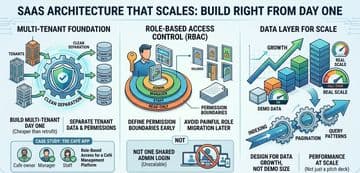
Designing for the scale you're growing into — not the demo you're pitching — so the product that gets you to Series A doesn't need a rewrite after it.
Most early-stage rewrites don't happen because the code was bad. They happen because the architecture only had to support the demo, not the next 10x of users, tenants, or data.
Multi-tenant from day one, even for a single customer
If your product will ever serve more than one customer or team, the multi-tenant, role-based foundation — separating each tenant's data and permissions cleanly — is far cheaper to build in from the start than to retrofit later. We built this pattern into Tre Cafe App, a café management platform with role-based access for Shop Owner, Manager, and Staff, because it's the same foundation most B2B SaaS products need on day one.
Role-based access control, not one shared admin login
Defining permission boundaries early — who can see what, who can change what — avoids a painful migration later when your second or third customer asks for a "read-only" or "manager" role you never designed for.
Designing for the data you'll have, not the data you have now
Indexing, pagination, and query patterns that work fine on a demo dataset can fall over at real scale. We design the data layer for where your growth curve is headed, not just where the pitch deck says you are today.
Building a SaaS product and want architecture that scales with you? See how we work with SaaS & startups or get in touch.

![[MVP Hook 2] Đừng xây biệt thự khi khách hàng chỉ cần một chỗ trú mưa](/_next/image?url=https%3A%2F%2Fdzpd8l05gmlinfrk.public.blob.vercel-storage.com%2Fuploads%2Fnews%2Fsmall%2F1788593291-3iu67x.jpg&w=256&q=75)

